Thursday, August 26, 2010

Kuta

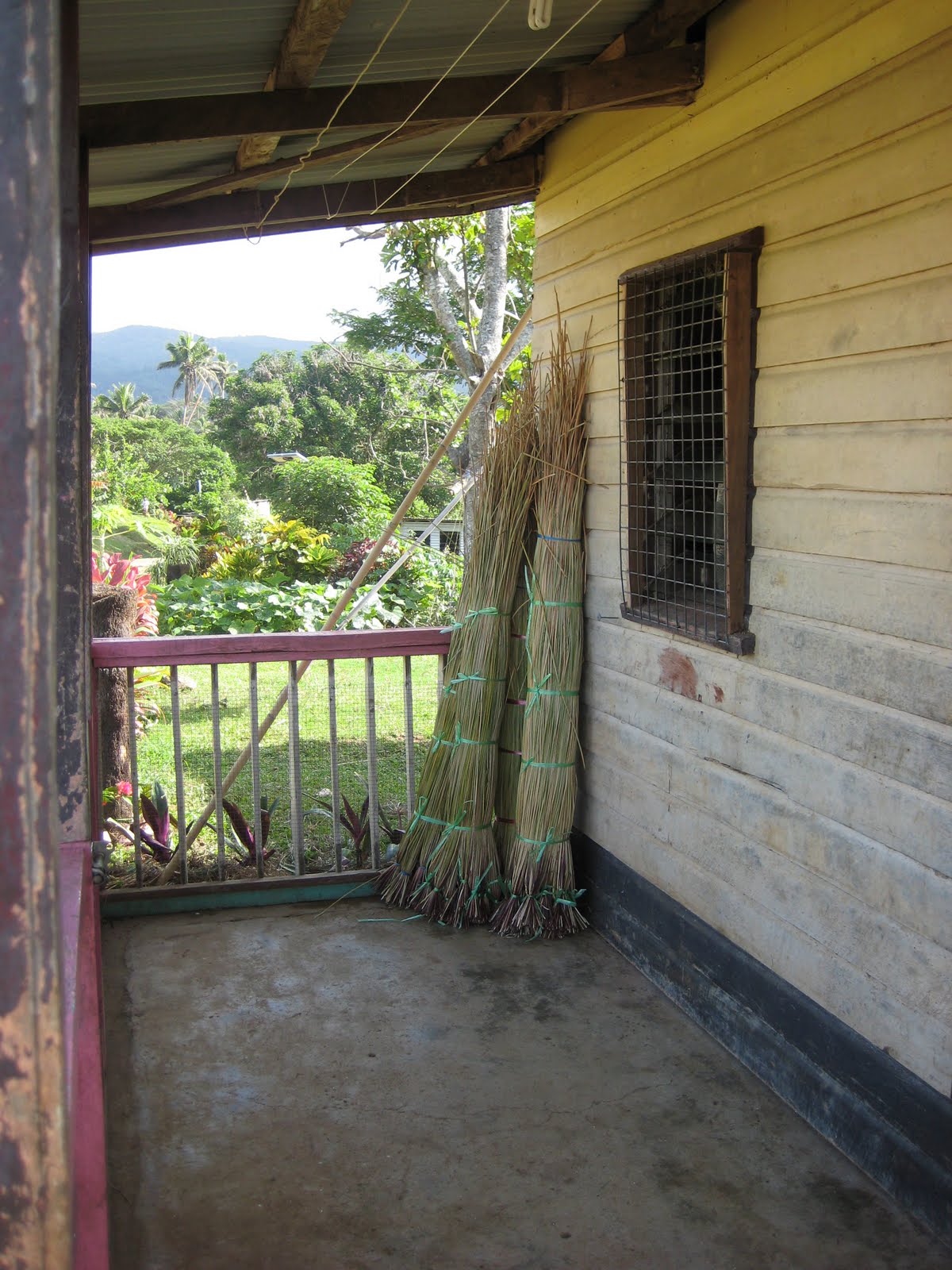
The Kuta reed is a rare plant that only grows in some areas of Fiji. My village has two patches, one of which is pictured below. When harvested, dried, flattened, and woven into a mat, Kuta becomes very valuable. It is an important source of income for the women in my village. Because our Kuta grows in low-lying areas, the patches flooded with salt water during Cyclone Tomas in March of this year. Everyone was very concerned that we wouldn't get a harvest this year, and that the salt might prevent future seeds from growing. And although the harvest was three months late, in July and August the women began going to the patches and bringing back the Kuta that will last them the entire year.

One average sized Kuta mat can bring in $100-$300 dollars when sold in Fiji's cities. Kuta mats are reserved for special occasions, and they make traditional gifts during weddings and funerals in Fiji. For Jaron and Risa's wedding (the 10-10-10 wedding of my sister and new brother-in-law), I knew I wanted to weave a Kuta and bring it to America with me.

Here are some pictures of my Kuta weaving adventure...

The village Kuta patch behind my house.

To get into the Kuta patch with the longest and thickest reeds, I had to wade through waist-deep water. The section of the patch we decided to harvest, however, had only ankle deep sludge. To harvest the reeds, we use special knives to cut bundles of kuta at their base...

... Then, we get rid of all the too-short and too-thin reeds using a special technique I learned from the women....

... and stack it up to take home...


When we throw the unusable Kuta on the ground and keep only the good reeds, the patch ends up looking like this. Sort of like a Kuta graveyard. But after a few weeks the new plants start to poke through.

Here I am with my bff Mareani after a 3-hour harvesting session. We are each carrying one bundle of Kuta. In order to make a mat, we will need at least three bundles.


To make the Kuta into something that is weavable, every day it must be laid out in the sun.

It takes approximately 30 minutes to put out and bring in the Kuta that is drying. Each bundle needs about 8 hours a day of sun for approximately 5 days to turn straw colored and be ready to work with.

Here are three of my bundles, post-drying.

To start weaving, we first pick out all the reeds that are similar in width. This is why three bundles are necessary to make one mat. After picking out the similar Kuta, there is one usable bundle that needs to be flattened. To do this, we walk on it, and then we use a shell or a spoon on each individual piece to finish preparing it.

This is how the Kuta mat is started. These pieces of Kuta are resting on a Voivoi mat. The major difference making Kuta so much more valuable is that it is much thinner. Whereas Voivoi is a flat and wide cross between a leaf and a reed that can be cut to any size, Kuta is thin and takes many more individual reeds to make one mat.

After a few minutes, the Kuta mat looks like this.

Here, my friend Mesi finishes weaving the first strip.

After a few weeks, there some patterns have been woven in, and the Kuta starts to grow outward.

Here, Jaron and Risa's wedding mat is almost finished. Mere is putting on the final row.

After we finished weaving and trimming all the edges, the ladies helped me roll all the mats up together so I could fit them in my suitcase and bring them home.

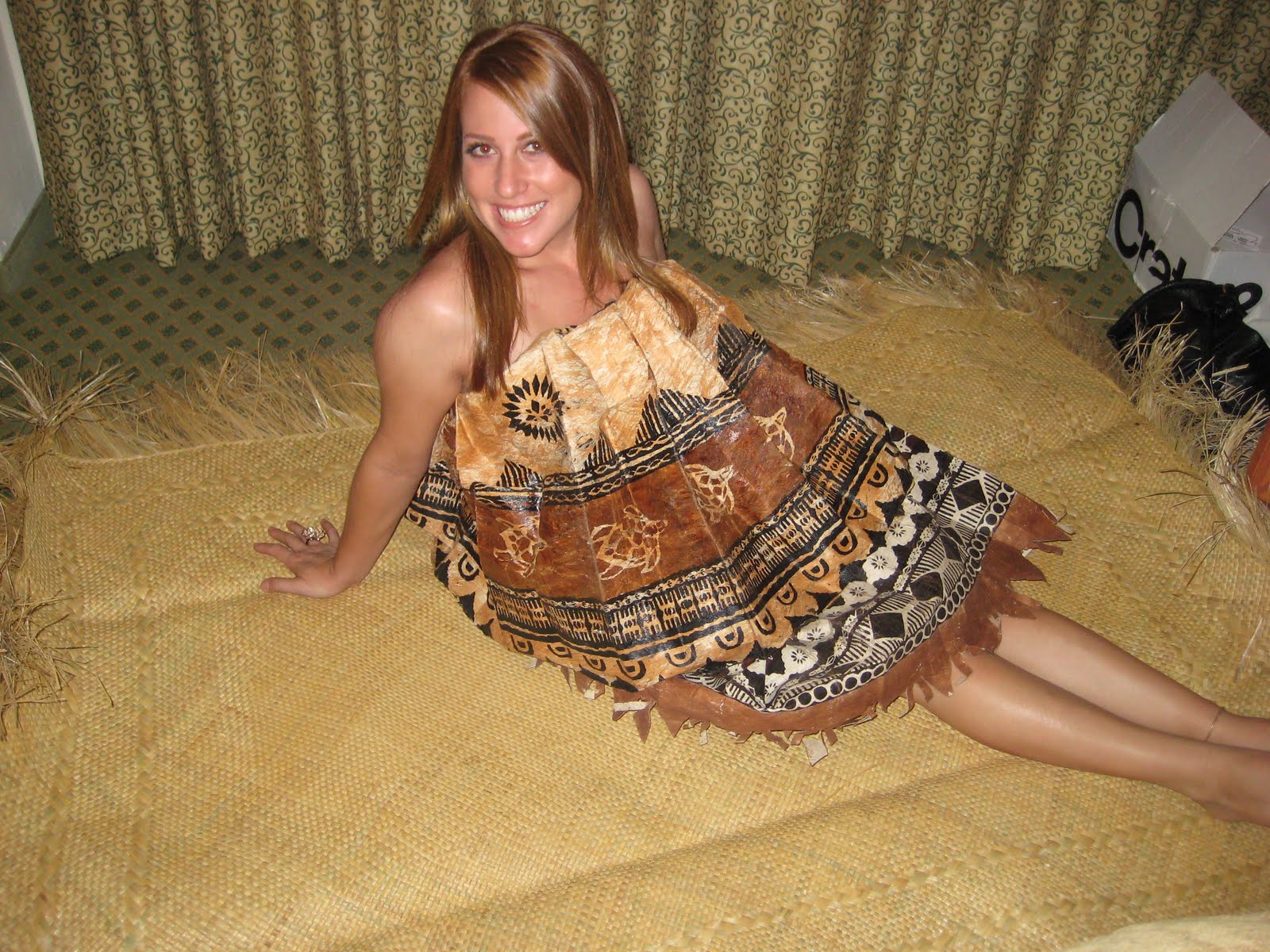
Here is Risa, wearing a traditional Fijian wedding outfit given to me by some friends, and sitting on her new Kuta.

At the rehearsal dinner I dressed Jaron and Risa both in half of a masi wedding costume.


And as one final surprise, the ladies wove me a small Kuta to go underneath Jaron and Risa's wedding cake.


Thanks for reading.

xx
Milika


:-)

Wednesday, August 25, 2010

Tuvatuva Ni Sava Wai: End of Construction!

This is (hopefully) the final blog entry of my water project. Hurray! 

Unfortunately, my camera broke shortly after the previous blog was posted (end of June), so many parts of the final construction went without photographs. Luckily, however, our generous Rotary Club partners and various Peace Corps Volunteers who came on site for visits allowed me to put a memory card into their cameras, and I was able to come away with these.

Enjoy!

*         *         *          *           *          *            *

We hope this is the FINAL CLEANING we ever have to do of our 40,000 liter water storage tank. 

From now on, clean water only will be held in this tank. This is except, of course, during times when we have major, yet-to-be repaired leaks in the village and we must bypass the new filters in order to meet volume demands of the community. This has happened about once a week since the filters have been functional (for approximately 6 weeks now), but we hope to install a bypass line from the roughing filter directly into the tank in the near future so the tank is never this dirty again.

Turaganikoro demonstrates just how muddy our old water could be (just in case you couldn't tell from previous pictures and entries).

The muddy residue left on our bodies after jumping inside the previously-dirty tank.


*         *         *          *           *          *            *

FINAL TOUCH-UPS FOR THE STRUCTURE.


Collecting gravel to use for a cement platform underneath the particle filters in the appropriate way: from a river bed that crosses into our Mataqali (village family clan) land.

And perhaps a more questionable gravel collection method...

That's a lot of gravel.


Once we finished building a box frame and filling it with rocks, we hand mixed cement from the gravel we collected (see above) and sand from the beach to cover the top and make a smooth surface. Working with cement is truly an under-appreciated art.

Inserting a section of 3"x10" Vesi (very hard wood) to serve as a barrier between the Sky Hydrants and the cement. Later we drilled steel rods in to hold them in place.

I'm not sure how we managed to avoid everyone signing their names sloppily in the cement foot, but in the end, the village guys let me carve in the month and year as our only permanent stamp on the structure.
Our Carpenter had freedom to design whatever railings he wanted for safety purposes on the tank platform. We would have been happy with simple rope, but I like his solution much better now that it's finished.


*         *         *          *           *          *            *

ROUGHING FILTER CONSTRUCTION: Filling the green tank with rocks and sand to filter large particles out before the water reaches our Sky Hydrant, .01 Micron filters down below.

A LOT of sand. I shoveled at least half of it myself, but I won't kid myself into thinking that I did most of the work: the boys had to carry it up from the beach to a suitable parking spot and load it into a truck!

Getting the gravel and sand up onto the tank platform.

Our Rotary Club engineer, Jeff, designed this interesting "manifold" piping system to filter the water into the roughing tank in such a way as to reduce channel-producing jets of water through the sand (thus possibly disrupting filtration).

Steve (the other Rotary Club partner guy) and some of the boys gluing together the manifold.

Manifold in place inside the green tank. 

Meanwhile, down on the ground, I was supervising the sifting of our beach sand to ensure some sort of uniformity in size. To do this, the boys and I designed a rough screen from spare 2"x4"s and some crab-trapping mesh wire overlapped several times.

Then, we spent the next couple hours sifting bags of sand, loading the new product into sacks, and hoisting them up onto the tank for the pour-into-green-tank crew.
Once all raw materials were in place inside the now-insanely-heavy  green tank, we framed the roof to protect our creation from weather and animals.


*         *         *          *           *          *            *

FINAL LUNCH AT THE TANK FOR THE WORK CREW.

Jeff and Steve were nice enough to drive down to the village so the ladies wouldn't have to carry their heavy pots and dishes all the way up to the tank to serve us.

A pretty standard meal: Waci vaka Lolo (boiled Taro Root leaves in coconut milk) with fish and boiled Dalo (Taro Root) and Uvi (Wild Yam).

Yummy. Those lunches are what I'll miss most about the construction phase of this project. Without a doubt.


*         *         *          *           *          *            *

FINISHED PRODUCT.

Final piping scheme.

I would try to explain it all here, but it is really as confusing as it looks. You have to be here in person, then I can show you. So come visit, okay?!

Final product. Roof on. Fence in place. Gate constructed.

Jimi, our oldest Village Foreman, shows off the bottled-water-quality clarity (!) of our new, clean, water.


Ilimo, the village leader of the project, drinks clean water straight from the check valve.


*         *         *          *           *          *            *

NOTES ON THE WATER SITUATION AS IT STANDS NOW 
(a.k.a. on-going challenges)

So, approximately 6 weeks after construction I wish I could write that everything has been peachy with the new system. But, unfortunately, this is a work-in-progress. 

Two Sky Hydrant filters can produce 40 cubic meters of water in a 24-hour period under ideal conditions (meaning zero head loss and friction between the filter output and the pipelines, and when they are freshly cleaned). Our Roughing Filter (the gravel and sand inside that elevated green tank) was intended to ensure that we could go at least a week between manual cleanings of the Sky Hydrants (by trapping potentially-clogging particles). We are learning now, however, that there are some important steps we might have missed in the ideal design of a Roughing Filter. Hopefully we (Rotary Guys and I) will be able to adapt what we have already constructed to make our now mandatory every-two-day cleanings less frequent. That way, I will feel more confident that the project is fully sustainable.

Furthermore, the village usage (as we know from all that elaborate testing I did with the Village Water Committee back in October-December 2009) is, on average, 27 cubic meters a day. Additionally, last year we were experiencing almost 800% additional leakage (which we know because we observed water level drops in the middle of the night when inflow pipes were removed and nobody in the village was using any water). After extensive leakage repair by Ilimo and myself (yes, I am basically a plumber now), we have reduced that number to about 50%. That means, on average, our community is using about 42 cubic meters of water a day. The filters produce 38 when they are clean (which I mentioned above is not all the time due to hiccups in our Roughing Filter scheme and the distance of the filters to make daily manual cleanings a realistic option).

Furthermore, this is a village that has approximately 3-6 km of piping ranging from the filter construction site and all the houses connected to our source. This system was first begun 15 years ago when the resevoir tank was built. Since then, each individual family has shouldered the cost of their own connections and piping. This means, that corners were cut. In almost every case, PVC (white plastic) pipeline is directly connected to (black rubber) Poltane pipeline through parts such as threaded T's and Elbows. Unfortunately, Poltane must be connected to PVC through galvanized fittings in order to create a true seal. Now that major leaks have been repaired, and consequently the water pressure has drastically increased throughout the village, each one of these fittings is starting to leak, and repairs are both costly and time consuming (imagine replacing an existing T that must be screwed into three buried lines... it's galvanized socket and union-central around here). To make matters worse, many of the lines are very shallowly dug (out of shear laziness), and because their locations are unmarked, there are frequent accidents with digging forks and cane knives. This means, our line of literally-misfit pipe connections is also riddled with punctured pipeline that has been "repaired" with tubing (essentially black rubber strips wound around the line and tied off). 

If you followed that at all (and I don't blame you at all if you didn't, because I'm not exactly proficient in technical, english, plumbing language), you might guess that it's a seriously uphill battle at this point. Fixing our leakage beyond 50% of usage (thus ensuring that we always have enough water in the village) seems impossible because every time we fix something, two something-else's pop up.

That all said, this is exactly why Peace Corps is a two-year program. We understand that change (and especially behavior-change like water conservation) doesn't happen in a day, and so we are committed to the long-haul to ensure sustainability of our projects. I'm not pretending like I don't want to tear my hair out, though, knowing that this project is going to continue to consume my service for the remainder of my time here!  When all is over, though, I will have something pretty amazing to show for all my hard work--and my community will have clean, safe, and (hopefully) plentiful water for generations to come.


*         *         *          *           *          *            *

As always, I thank you for visiting my blog. 
Missing everyone lots.

xx
Milika 


Wednesday, June 30, 2010

An Inventory of A Year's Worth of Village Projects

In light of the recent blog post I made hilighting my village's water project, I thought I should remind everyone that Peace Corps work is about capacity building (and not bringing in outside funding). So, here is a brief list of all the projects I've done so far in my village. Very few of these projects involve money.

- Water Project (filter construction).
- Teeth Brushing (with pre-school kids and parents).
- Village Cleanup and Waste Separation (with primary school students).
- Kickball Team (class 7&8 at the local primary school).
- Aerobics Classes (with the women).
- Budget Development and Money Management (with the Village Development Committee).
- Nutrition Work ("Iron Chef" Cooking Competition with the women's group).
- Gardening (leading by example, giving away seeds) and Planting Trees (raising seedlings).
- 1-on-1 Relationship Violence Awareness and Education (advocacy and safety planning for survivors, explainations aimed at prevention in male population).
- HIV/AIDS Workshop (at one of the training villages during the Volunteer Connect Conference).
- SPCA Outreach: Animal De-Sexing (in the works).
- Condom Dispensory (my house...).
- Teaching French to Village Kids (once a week while we walk home from school).
- World Geography Awareness (informal with inflatable globe in my house).
- Water Conservation Education.

and more...


Vinaka Vakalevu for checking out the blog.

xx
Milika

:-)

Noqu Teitei ("My Garden") as of July 2010


(June 2010)

When I left for the Peace Corps, I had three personal goals (in addition to helping the community). #1 was to learn a new language. #2 was to learn to cook. #3 was to learn how to garden.

I am very proud of the gardening skills I have developed. Here are some pictures of what my teitei looks like so far.


(August 2010)

This is by far the most self-indulgent article I've ever posted on this blog before. I realize that most of you probably don't care to see the minute changes in plant growth taking place on my compound, but I am utterly fascinated by what is taking place before my eyes. It is so cool to plant something, watch it grow, see it flower, and finally eat its fruit! So, I've posted the most recent pictures of my garden and flowers (that I spend at least 30 minutes watering every single morning and at least a few hours a week weeding and tending to). These plants are one of my proudest accomplishments so far in Fiji.

So, enjoy.
:-)

*************************************************


Noqu Kompound: Before. (March)


Noqu Kompound: After. (June)


Noqu Kompound. (August 2010) 


Pink Frangipani Tree. (June 2010)


Bougainvillea Flowers. Planting along my front veranda railing and against my bathroom wall. They just started flowering! (August 2010)


Fijian Flower that's growing next to my compost. (August 2010)


Papukeni (Pumpkin). (June 2010)

Pumpkin. (August 2010)


Kiukaba (Cucumber). (June 2010)

Cucumber. (August 2010)


Passionfruit. (June 2010)

Passionfruit. (August 2010)


Squash. (June 2010)

Squash. (August 2010)


A view of all three creeping plants. (June 2010) 

There is also a watermelon plot to the left of the Squash, but at the time this picture was taken, the buds were too young to be remarkable.

Zucchini. (August 2010)


One of S.K.'s kittens, Meleni. (translation: "Melon". I like to think that this name, given by her new owners, was at least partially inspired by the name of my cat back home in San Diego, California, whose name is Mango.)


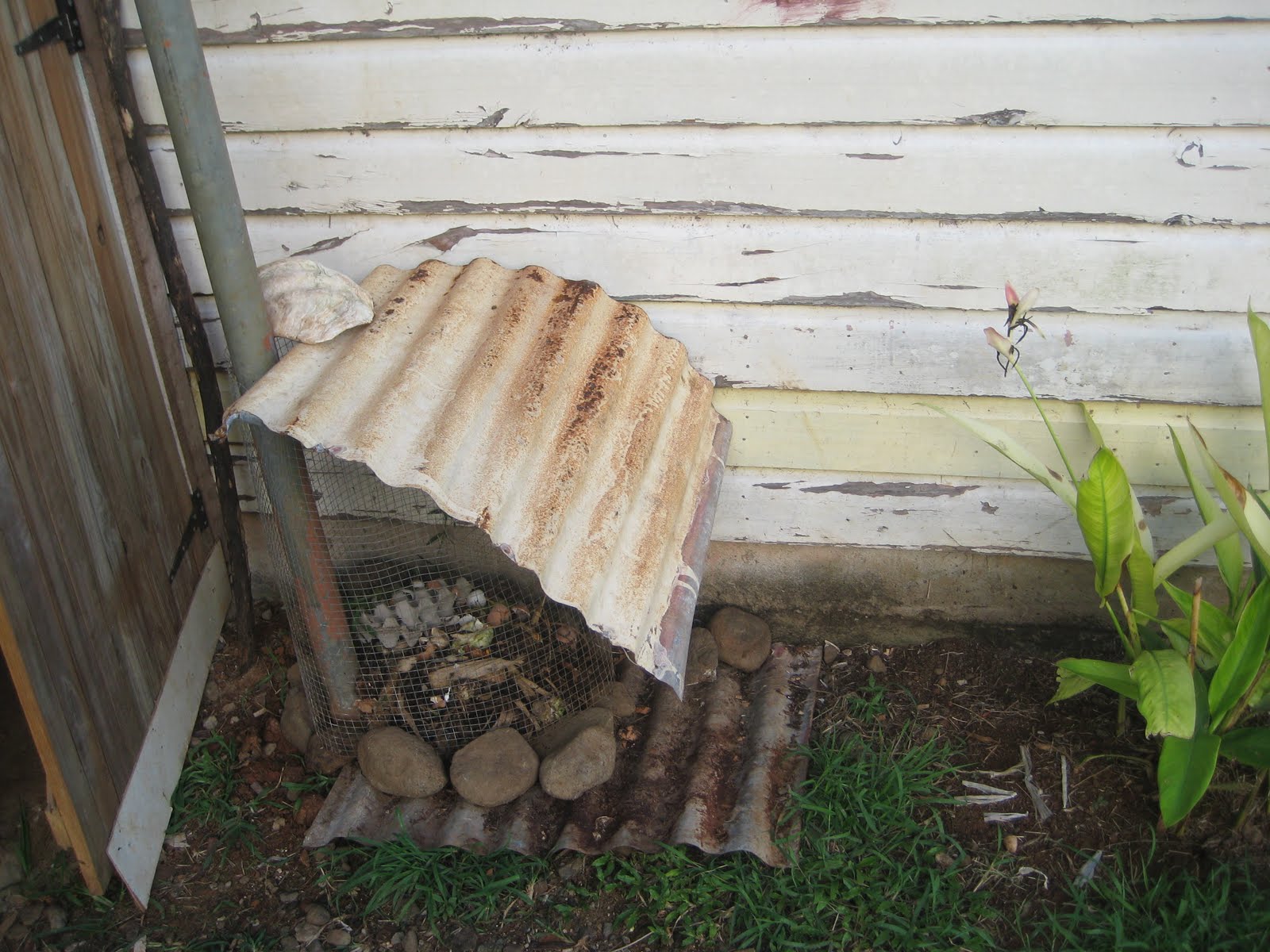
My Compost.


********************************************************************


The side yard: Before. (March 2010)


The side yard: After. (May 2010)


The Side Yard. (August 2010)


Dhanya and Cilantro. (May 2010)


Rokete: Lailai/Levu (Hot Chili Peppers: Small/Large), Tomole (Basil). (May 2010)

Basil. (August 2010)

Rokete (Hot Chili Peppers). (August 2010)


Baigani (Eggplant), Cobona (Lemongrass). (May 2010)


Kareti (Carrots), Kiukaba (Cucumber). (May 2010)

Cucumber. (August 2010)


**********************************************************************


The back yard. (March 2010)


The back yard. (April 2010).


The back yard. (June 2010)
The main garden consists of: Tomata (Tomatoe), French Beans, Butter Beans, Capsicum (Bell Peppers), Kaveti (Cabbage), Letisi (Lettuce), Broccoli, and Cauliflour.

The Backyard Garden. (August 2010)


Tomatoes in the Back Garden. (August 2010)


Next to the main garden there is a living fence (to deter prying eyes) of Sila (Corn). (June 2010)

New Backyard Garden. Watermelon, Round Cabbage, Carrots, Long Beans, French Beans, Corn, Eggplant, Avocado Tree, and Papaya Tree. (August 2010)


Fijian Cilantro. (August 2010)

Nursery for future planting. (August 2010)

******************************************************

 (August 2010)

Another reason that gardening has been one of my most satisfying tasks thus far in Fiji has to do with the transformation that has taken place around me in the village, simply as a second-degree result of my efforts... Almost every single house has started a vegetable garden of their own!!

This is not a culture that prides itself on growing perishable vegetables close to home. Instead, Fijians hike into the jungle and plant enormous "fields" of root crops. After 4-6 months of no work (weeding the "farm" once), they harvest the roots, which can last up to 6 weeks before being cooked. Furthermore, while the crops are growing underground, the leaves can be picked, boiled in hot water, and eaten with Coconut milk (squeezed coconut shavings mixed with hot water). This is the staple of the Fijian diet... at least in my village. It is sometimes supplemented by fresh fish.

Unfortunately, there is some racism in Fiji between the ethnic Fijian population, and the approximately 30% Indo-Fijian population that is mostly concentrated in town areas. Traditionally, vegetable garden is associated with Indo-Fijian culture, and that is another reason that Ethnic Fijians often resist starting home gardens.

However, when I began my own garden--by planting simple, Fijian, crops like Bele (a leaf that can be boiled and eaten like Spinach), Pumpkin, and Eggplant--many people in my village began to grow jealous. So, we started sharing seeds, and planting tips. Luckily, around the time that everyone was starting up these staple crops, the "hurricane relief" fund kicked in and cabbage, bean, and cucumber seeds were distributed to villages all across my island. As you can imagine, the gardening extravaganza blew up from there. Now, I am proud to say that most of the women are getting out of their houses more and contributing to their families in a traditionally-male way (by providing food). The teachers at the local elementary school have remarked that the kids from my village have started bringing noticeably healthier lunches to school, and all the village families have started to eat more balanced diets (getting a far greater variety of nutrients than before). 

In the Peace Corps, this is what we refer to as a secondary project. I am VERY proud of mine.


Emi in her Cabbage Patch. (August 2010)


Ili and Jo's Tomatoes and Long-Beans. (August 2010)


Lydia's Eggplant, Bean, and Herb garden. (August 2010)


Sotia's Corn Patch. (August 2010)


Mesi and Tevita's Cabbage and Cucumber Nursery. (August 2010)


That's all for now.
Vinaka Vakalevu for visiting my blog.
xx
Milika